 0804581150308045811503
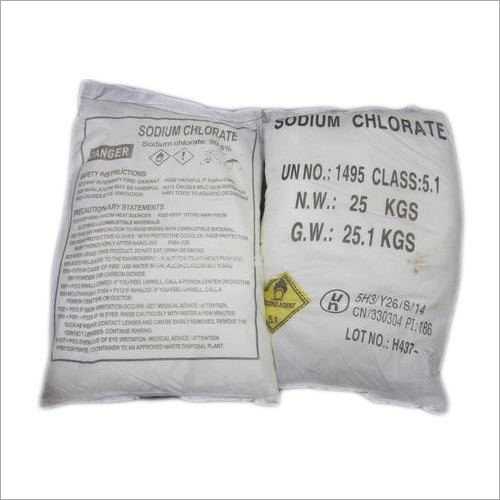
Sodium Chlorate
20.00 - 100.00 INR/Kilograms
Product Details:
- Solubility Water Soluble
- Smell Odorless
- Form Powder/Crystal
- Structural Formula ClO3- bonded to Na+
- Melting Point 170%
- Storage Store in a cool, dry place; keep container tightly closed
- HS Code 28299010
- Click to View more
X
Sodium Chlorate Price And Quantity
- 20.00 - 100.00 INR/Kilograms
- 500 Kilograms
Sodium Chlorate Product Specifications
- Neutral to slightly basic (pH 6.08.0 for solution)
- Oxidizing agent, bleaching, herbicide
- Textile Industry
- 99%
- 231-887-4
- No
- 2.49 Gram per cubic centimeter(g/cm3)
- 106.44 g/mol
- 28299010
- Sodium Chlorate
- Odorless, slightly saline
- NaClO3
- Sodium salt of chloric acid
- Decomposes before boiling
- Industrial Grade
- Crystalline
- Oxidizing Agent
- 7775-09-9
- ClO3- bonded to Na+
- Store in a cool, dry place; keep container tightly closed
- 170%
- Sodium Chlorate
- Inorganic chemical
- Water Soluble
- Industrial/Technical standard
- Powder/Crystal
- Odorless
- Produces toxic fumes of chlorine and oxygen
- Incompatible with strong acids, reducing agents, and combustibles
- Harmful to aquatic life
- Stable under recommended storage conditions
- 2 years
- HDPE bags, drums
- White crystalline solid
Sodium Chlorate Trade Information
- Gujarat
- Cash Against Delivery (CAD), Cash Advance (CA), Cheque
- 10000 Kilograms Per Week
- 3 Days
- Yes
- Contact us for information regarding our sample policy
- 25 kg bags and as per requirment packing available
- Asia, Australia, Central America, North America, South America, Eastern Europe, Western Europe, Middle East, Africa
- , All India, South India, Central India, West India, North India, East India, Gujarat, Karnataka, Kerala, Lakshadweep, Mizoram, Meghalaya, Manipur, Andhra Pradesh, Bihar, Chandigarh, Daman and Diu, Goa, Jharkhand, Odisha, Punjab, Assam, Delhi, Dadra and Nagar Haveli, Andaman and Nicobar Islands, Arunachal Pradesh, Chhattisgarh, Haryana, Himachal Pradesh, Jammu and Kashmir, Madhya Pradesh, Maharashtra, Nagaland, Rajasthan, Sikkim, Tamil Nadu, Telangana, Tripura, Pondicherry, Uttar Pradesh, Uttarakhand, West Bengal
- msme and iso certified company
Product Description
Sodium chlorate is a crystalline solid with no odor that is commonly employed in aqueous solutions. This energy-intensive, multistage process is carried out in closed-loop plants with low emissions. This chemical is tested under various parameters to ensure its high quality and effectiveness. Herbicides, explosives, colors, cosmetics, medications, paper, and other compounds all include it. Sodium chlorate necessitates maintaining proper chemical balances and exact management. Because of its herbicidal and defoliant qualities, sodium chlorate is being explored for use in organic agriculture.
Product details
|
Class |
5,1 |
|
Brand |
Shree Maruti Impex India |
|
Purity |
98 % |
|
Packaging Type |
PP Bags |
|
Usage/Application |
Industrial |
|
Physical State |
Powder |
|
UN Number |
1495 |
|
Net Weight |
25 kg |
|
Gross Weight |
25.1 kg |
Major Industrial Uses
Sodium Chlorate is extensively utilized in the textile sector for bleaching and as an oxidizing agent. It also serves as a powerful herbicide in agricultural applications. Its high purity and efficiency make it suitable for large-scale manufacturing processes, ensuring consistent results in oxidation reactions and bleaching operations.
Safe Handling and Storage Guidelines
To maximize shelf life and maintain stability, Sodium Chlorate should be stored in cool, dry environments, in tightly sealed HDPE bags or drums. Keep away from heat sources and incompatible substances like strong acids and reducing agents. Appropriate storage reduces the risk of thermal decomposition and ensures the product remains effective for up to two years.
Environmental and Safety Precautions
Although invaluable in industry, Sodium Chlorate is toxic if ingested and poses potential hazards to aquatic life. Care must be taken to avoid release into the environment. Always adhere to handling protocols, use personal protective equipment, and follow local regulations for disposal to mitigate environmental and health risks.
FAQs of Sodium Chlorate:
Q: How should Sodium Chlorate be stored for maximum shelf life?
A: Keep Sodium Chlorate in a tightly closed HDPE container or drum, placed in a cool, dry area. This minimizes moisture exposure and thermal decomposition, ensuring optimal quality for up to two years.Q: What is the recommended process for using Sodium Chlorate in textile bleaching applications?
A: Dissolve Sodium Chlorate in water to prepare the required concentration, then add it to the textile processing system. Ensure proper ventilation and avoid mixing with reducing agents to prevent hazardous reactions.Q: What are the main benefits of using Sodium Chlorate as an oxidizing agent?
A: Sodium Chlorate provides high oxidative power, leading to efficient chemical reactions in textile bleaching and industrial processes. Its high purity ensures consistent, effective performance.Q: When does Sodium Chlorate decompose and what precautions should be taken?
A: It decomposes when heated above its melting point (170C) or exposed to strong acids, releasing toxic chlorine and oxygen fumes. Always handle away from ignition sources and incompatible chemicals.Q: Where can Sodium Chlorate be used beyond the textile industry?
A: Besides textiles, Sodium Chlorate is used as a herbicide in agriculture and in various chemical manufacturing processes requiring strong oxidation capabilities.Q: What environmental risks are associated with Sodium Chlorate usage?
A: Sodium Chlorate is toxic to aquatic organisms. Prevent accidental release into waterways, follow recommended disposal guidelines, and use protective gear to minimize health and ecological risks.Q: Is Sodium Chlorate safe to handle and what measures should be taken during use?
A: While stable under proper conditions, Sodium Chlorate is toxic if ingested and chemically reactive. Use protective equipment, avoid direct contact, and ensure good ventilation during handling.Tell us about your requirement

Price:
Quantity
Select Unit
- 50
- 100
- 200
- 250
- 500
- 1000+
Additional detail
Mobile number
Email

Other Products in 'Powder Chemical' category


We are only dealing in Bulk Orders
Contact

- 2981, Nr. Gurjari Mata Vad, Eye Hospital Road, Anand,Anand - 388320, Gujarat, India
- Phone : 08045811503
- Send Inquiry
TREASURE CHEM GUARD LLP
GST : 24AAWFT0315R1ZK
GST : 24AAWFT0315R1ZK
 Send Inquiry
- Mr Virendra Patel (Partner)
- Mobile :08045811503

TREASURE CHEM GUARD LLP
All Rights Reserved.(Terms of Use)
Developed and Managed by Infocom Network Private Limited.
Developed and Managed by Infocom Network Private Limited.

